
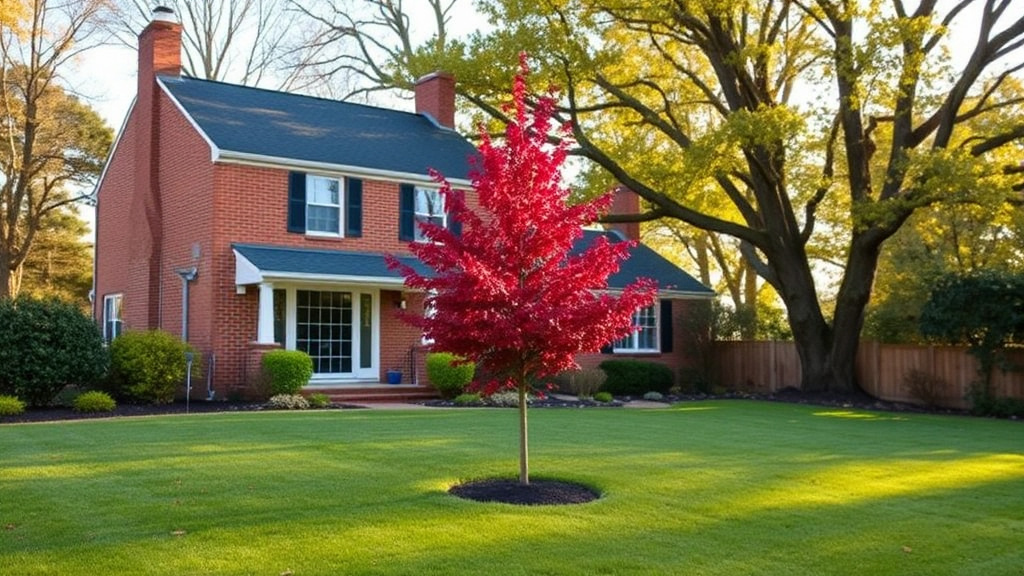
A new tree is one of the few things you add to a yard that gets better every year. It is also one of the few things that is very hard to undo. A maple that looks tidy and small at the garden centre can be forty feet wide in a couple of decades, and by then it is sitting exactly where you put it. In older neighbourhoods like Falls Church, where big oaks and maples already shade narrow lots, the spot you choose matters even more.
This guide covers the questions worth asking before the shovel goes in: how big the tree will get, what is under the ground, what is overhead, and how the tree fits with the house, the neighbours and the trees already there.
Start with the tree it will become
The most common mistake is planting for the size of the tree today. Before you pick a spot, look up the mature height and spread of the species you have in mind. The label at the nursery usually lists it, and your local extension office has reliable numbers for most trees sold in Northern Virginia.
Use the spread, not the height, to plan the spacing. A tree with a mature canopy forty feet across needs about twenty feet of clear space on every side of the trunk to grow without rubbing against the house or crowding another tree. Smaller ornamental trees, such as redbuds or dogwoods, can sit much closer to a building. Large shade trees, such as oaks, tulip poplars and sycamores, belong well out in the yard.
A simple rule many homeowners use: keep large shade trees at least twenty feet from the foundation, medium trees at least fifteen feet, and small flowering trees at least eight to ten feet. These are starting points, not guarantees, and the right number depends on the species and your soil.
Look down before you dig
Most of a tree's roots grow in the top couple of feet of soil and spread well past the edge of the canopy. That puts them in the same layer as water lines, sewer laterals, gas lines and buried cables. Before you dig any hole, contact Virginia 811 so the utility lines on your property are marked.
Once you know where the lines run, keep larger trees well clear of them. Roots do not usually break sound pipes, but they will find their way into a cracked or leaking sewer line, and a tree planted on top of a line can make future repairs much harder. Driveways, patios and sidewalks deserve the same thought. Shallow roots under paving can lift slabs over time, so give the tree room to spread into open soil instead.
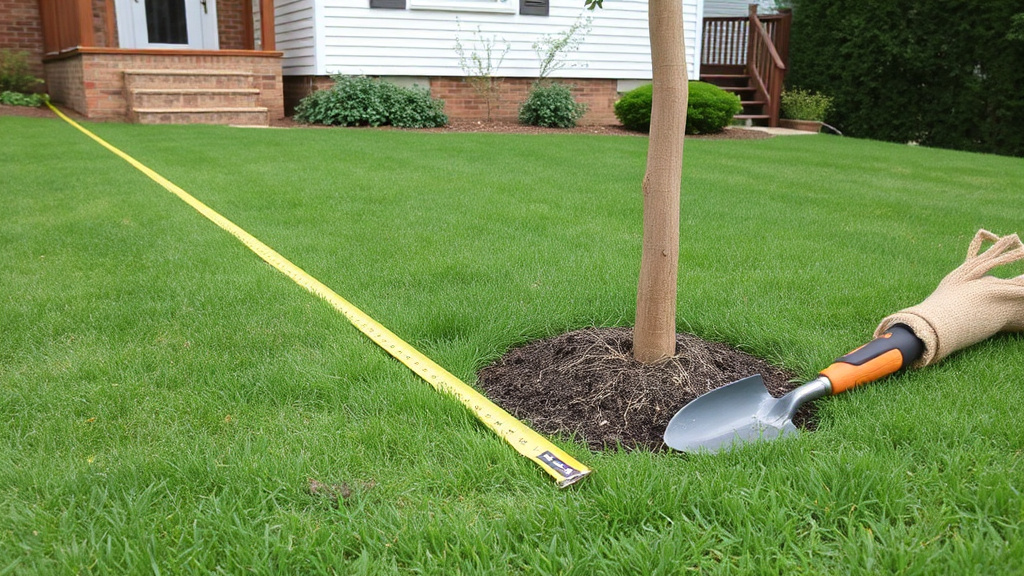
Look up, too
Overhead wires are the other common trap. Any tree that will grow taller than the lines above it should not go underneath them. If a planting spot sits near the service drop to your house or near the street lines, choose a small tree that tops out well below the wires, or move the spot.
Think about the roof and gutters as well. Branches that hang over a roof drop leaves and twigs into the gutters, give squirrels a bridge onto the house and can scrape shingles in wind. A tree set far enough back that its mature canopy ends short of the roofline saves years of cleanup and pruning.
Work with sun, shade and wind
Placement is not only about avoiding problems. A well placed tree can make a house more comfortable. Large deciduous trees on the south and west sides shade the house and the patio in summer, then let the winter sun through once the leaves drop. Evergreens on the north or northwest side can soften cold winter winds. In a yard that already has mature trees, look at where their shade falls through the day before adding another, so the new tree is not stuck in deep shade and the lawn or garden still gets light.
Wind and storms deserve a thought too. Northern Virginia sees strong summer storms and the occasional heavy wet snow or ice. A tree with a long fall line toward the house, the driveway or a neighbour's garage is worth placing somewhere else. For more on keeping trees in good structural shape once they are established, this guidance on pruning for healthy trees is a useful companion.
Property lines and neighbours
Trees do not stop at the fence. A tree planted right on the line will send branches and roots into the neighbour's yard, and that can lead to friction later. Plant far enough inside your own lot that the mature canopy stays mostly on your side, and talk to the neighbour before you plant anything large near the line.
In Falls Church, it also pays to know which jurisdiction your lot is in. Some homes with a Falls Church mailing address are inside the independent City of Falls Church, and others are in Fairfax County, and the rules can differ. Checking early saves surprises later if the tree ever needs major work.
Putting a plan on paper
A rough sketch makes planning backyard tree placement around the house much faster. Draw the house, driveway, patio, fences and any sheds, then mark the utility lines once they are flagged. Add the existing trees with circles showing their current canopy. Then draw a circle for the new tree at its mature spread, and slide it around until it clears the house, the lines and the other trees. It takes half an hour and avoids most of the problems above.
If you are planting several trees, mix species instead of repeating one, and space them so each has room to grow. A varied planting holds up better against pests and disease that target a single kind of tree. For ideas on caring for a mixed yard over time, see these notes on nurturing a neighbourhood's urban forest.
When to ask an arborist
Most small trees are an easy homeowner project. A second opinion helps when the yard is tight, when the new tree will sit near an existing large tree, or when an older tree is already too close to the house and you are deciding whether to keep it.
G&V Tree Service Inc has provided tree services in Falls Church since 2001. The company has ISA certified arborists on staff, prunes to ANSI A300 standards and is a TCIA member. G&V gives free on-site estimates, with an arborist looking at the tree and the lot before any price is given, and works out early whether the City of Falls Church or Fairfax County governs the address. You can reach the office at (703) 569-2570.
Getting there
If you want to drop by the office, here is a map with directions starting from Deerlick Park in Springfield.
G&V Tree Service Inc · 6434 Brandon Ave, Suite 204, Springfield, VA 22150 · (703) 569-2570
A tree placed with its full size in mind will shade the right windows, stay clear of the pipes and wires, and keep the yard looking good for decades without fighting the house.